Stop Over Mixing Your Dough

I’ve been experimenting with low-knead, and no-knead doughs. I’ve come to the conclusion for the home baker at least, there is zero need for a mixer, and when kneading by hand, if you’re doing a cold ferment you can get away with very little kneading.

If you have an infirmity in your hands, and you can’t knead dough then by all means use a mixer. Or if you are making large batches of dough, then you need a mixer. But to make 3 or 4 or even 8 to 10 pizzas, skip the mixer. Knead by hand, and only knead for a couple of minutes. Any longer is not necessary in my experience.

My low-knead dough is so good, I’m seriously perplexed as to why so many recipes have you mix the living daylights out of the pizza dough. There’s no way I’m the first to discover this. No-knead bread doughs are common. I’ve not stumbled onto some cosmic hidden secret. I have a serious question; why? Why are you mixing your dough so long?

I had one person on Facebook tell me my no knead pizza was “odd.” Huh? I thought the comment was odd, especially since it was coming from someone who is a very experienced home cook and baker.

Maybe low-knead/no-knead pizza doughs are a great cosmic secret.

I have not tried a same-day low knead dough. It may not work. I cold proof all my doughs at least 24 hours. Gluten will form during cold fermentation, and that’s important to understand. We don’t need to create a strong gluten structure when we knead or mix, time will do it for us.

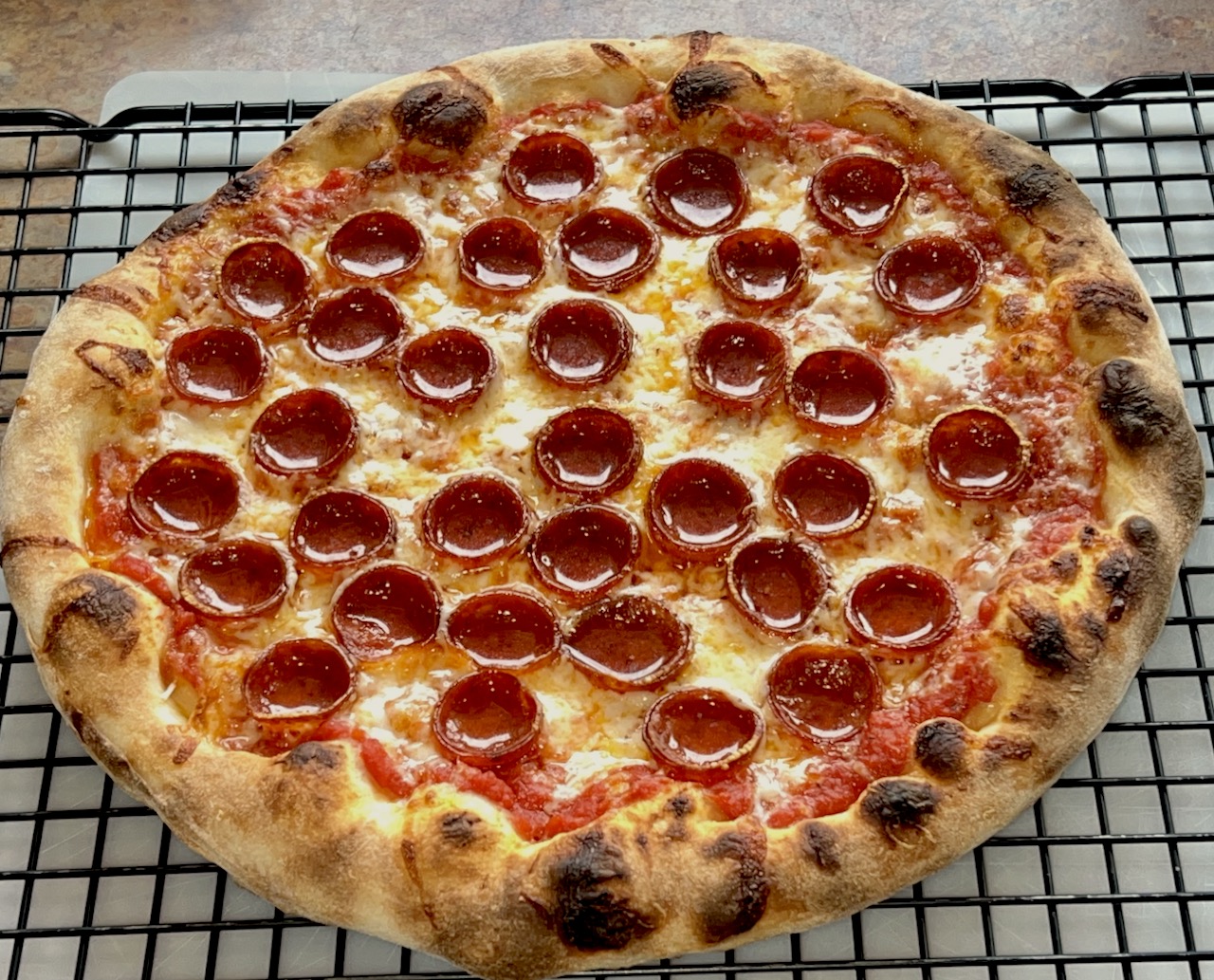
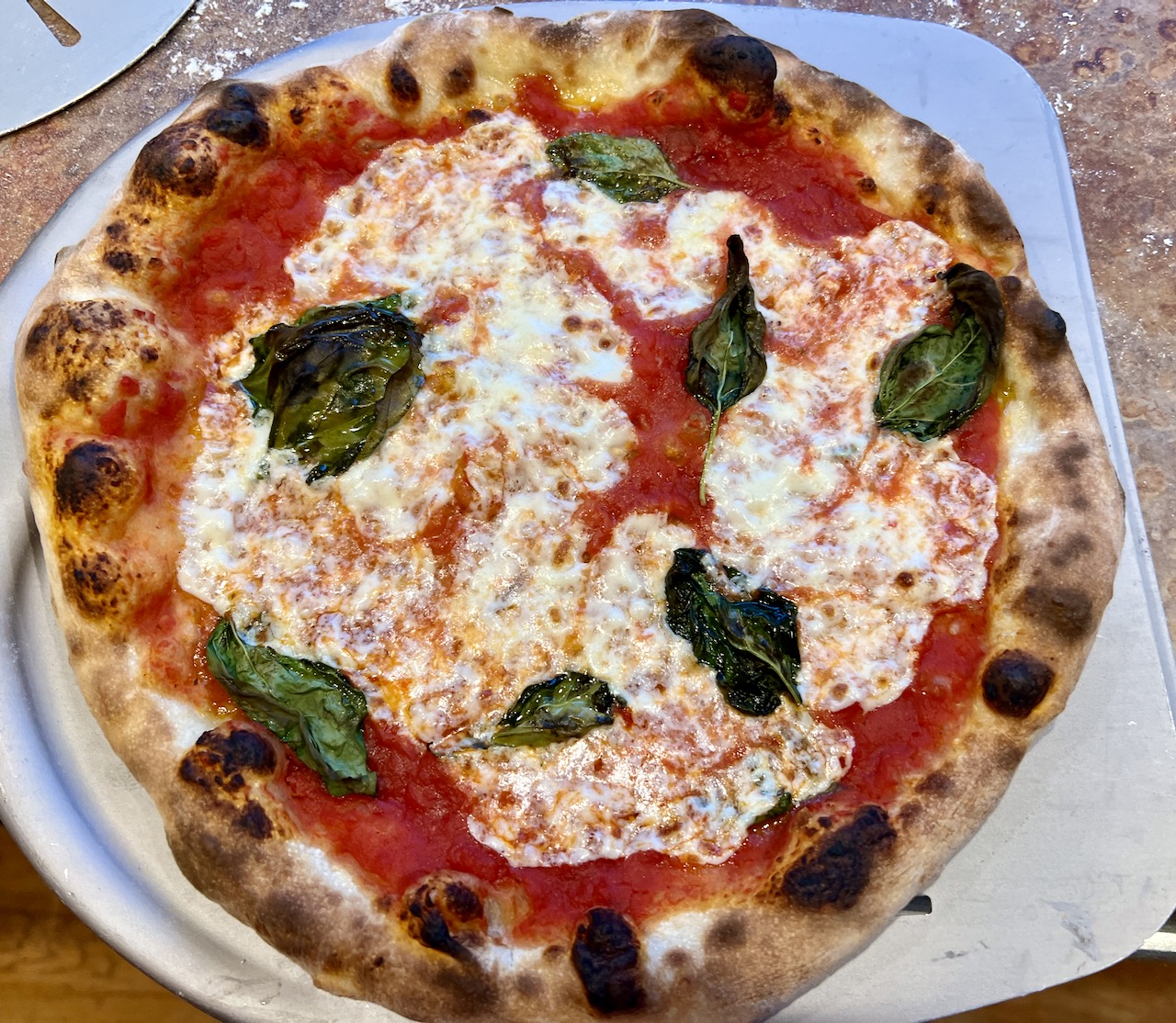
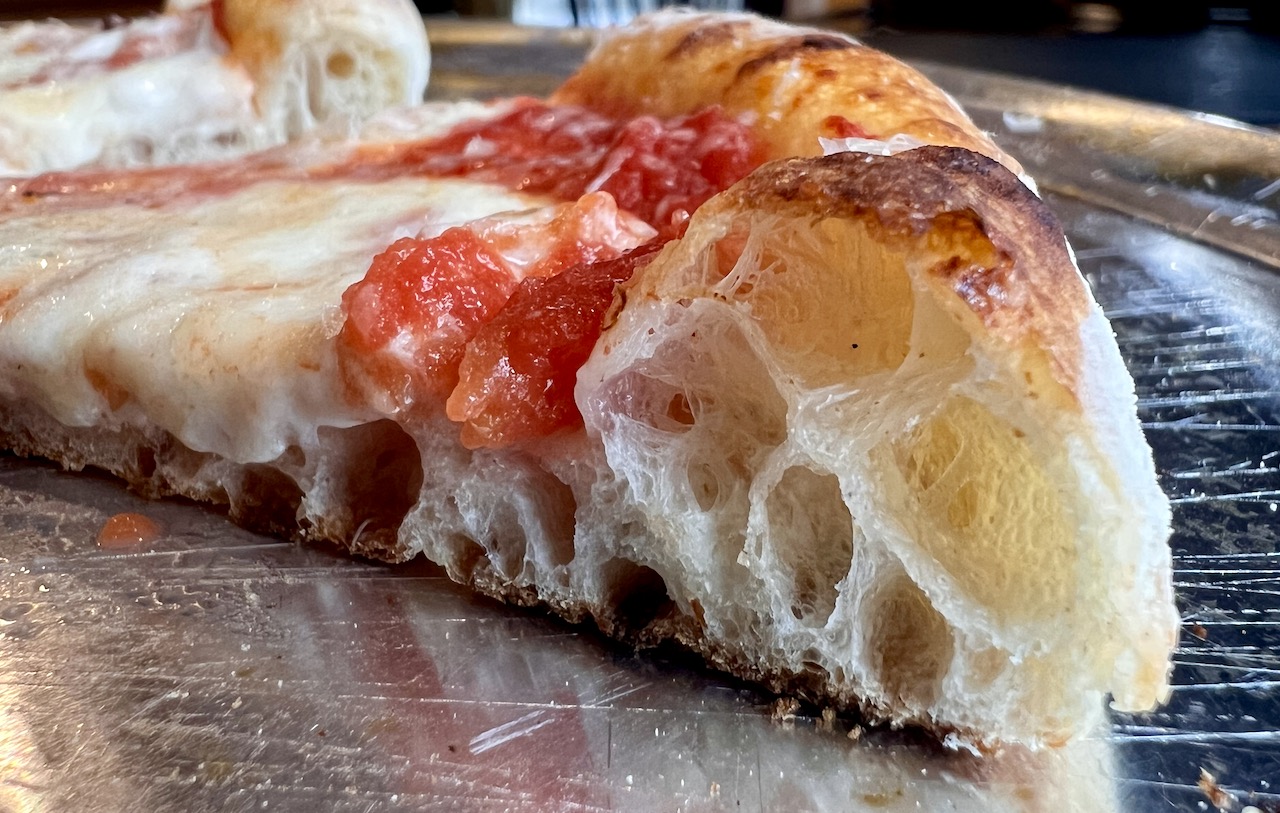
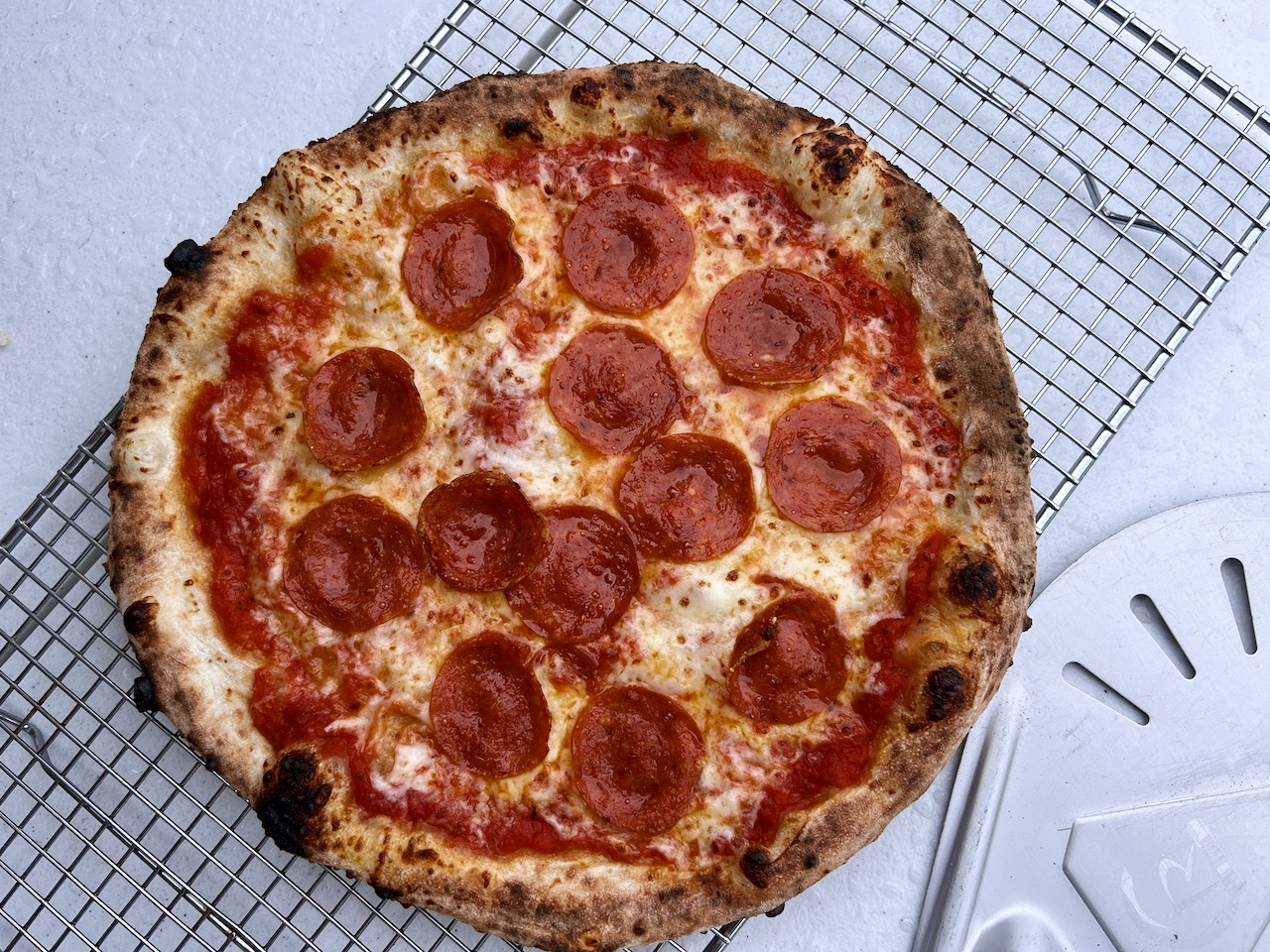
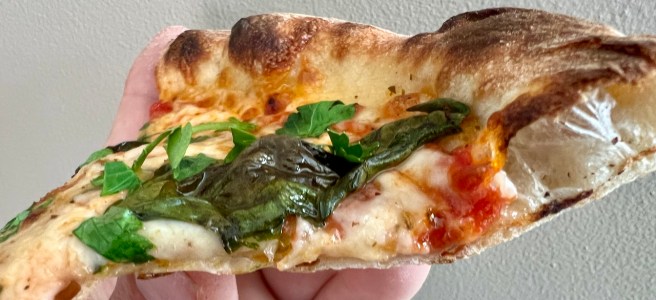
The texture of a low-knead dough is nothing short of remarkable. My taste in pizza is heavily influenced by two people. Chris Bianco and Dan Richer, of Pizzeria Bianco, and Razza Pizza Artigianale, respectively. Both their pizzas are exceptionally light, airy, crisp and chewy, but tender. That’s what I’m shooting for when I make pizza. I want my pizza to be light. I want it to be what I call “tender/chewy.” Mixing less creates a more tender crumb that still has plenty of the chewiness you expect of good pizza. It helps to make the pizza light, and that lightness aids crispness. The pizzas I’ve made using this method are an absolute joy to eat. And, if you’re used to dense, heavy, overly-chewy, bready pizza, try my method. You may be surprised at just how good homemade pizza can be.

Low-knead/no-knead pizza dough.

Use any flour you like. High gluten flours work better for a no-knead dough.

Put everything in a bowl, and stir until it forms a shaggy dough. Then knead in the bowl until it forms a dough, about 45 seconds. For a no-knead dough, cover and refrigerate for at least 24 hours, longer is better.

For low-knead dough, cover, and allow to rest for 30 minutes. Then, place the dough on a counter and knead by hand for two minutes. Cover and refrigerate for at least 24 hours, up to 96. 72 hours is best and will create a lighter, more crisp crust, though I’ve had excellent results letting the dough sit in the fridge up to five days.

After the cold ferment, ball the dough, cover, and proof at room temperature for about three hours before baking.

Bake in a 550F degree oven. Use convection if you have it. Place your stone or steel on the top most rack. Preheat at least 45 minutes. Bake the pizza for about three minutes, then turn on the broiler. Watch closely and pull from the oven when the crust is nicely browned and has some char, about two minutes.

If you have a high heat pizza oven, omit the sugar and oil. Cook accordingly.

Better than McDonald’s

A couple months back I set out to make shoestring fries at home. As anyone who’s attempted this can tell you, it’s frustrating. Homemade fries, especially McDonald’s style shoestring fries are very hard to do well at home. There’s a reason for that. McDonald’s and others’ french fries are made in a factory, and created by food scientists using equipment and ingredients the home cook doesn’t have access to. Most homemade fries lack the crispness and golden color of chain restaurant fries. They come out limp, dark brown, have an overcooked taste, and lack the lightness of processed fries.

I started doing research and stumbled upon a technique that works. I used my harshest critic, my wife, as a taste tester and after eating a few, she said to me, “These are better than McDonald’s.”

Success!

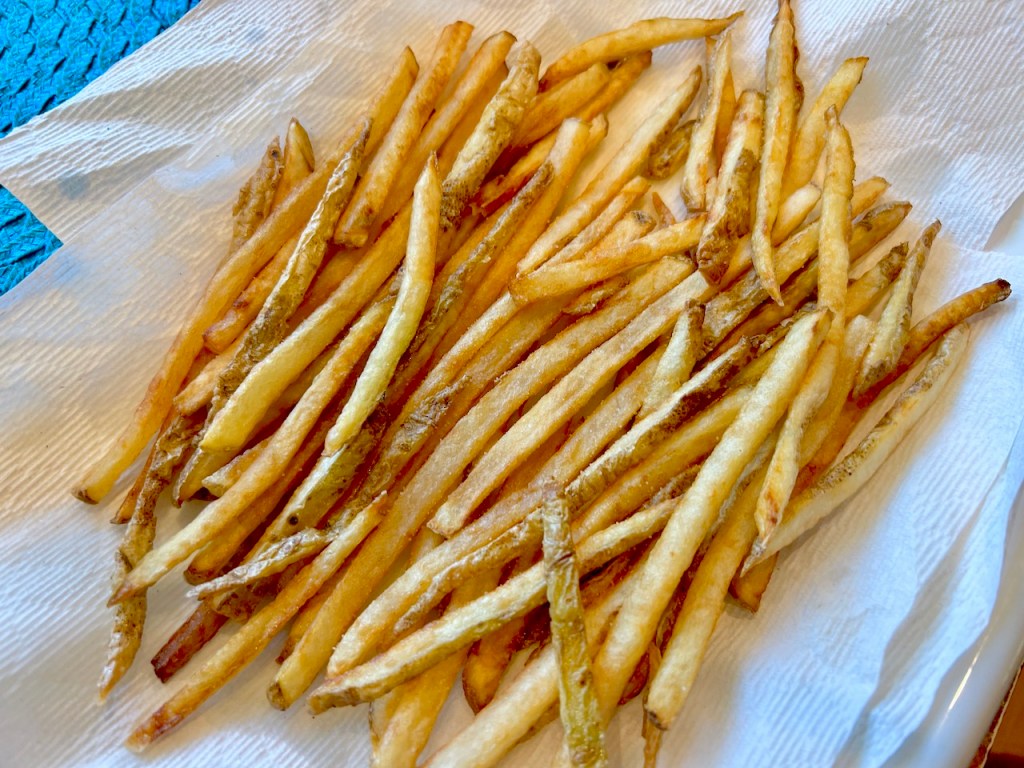
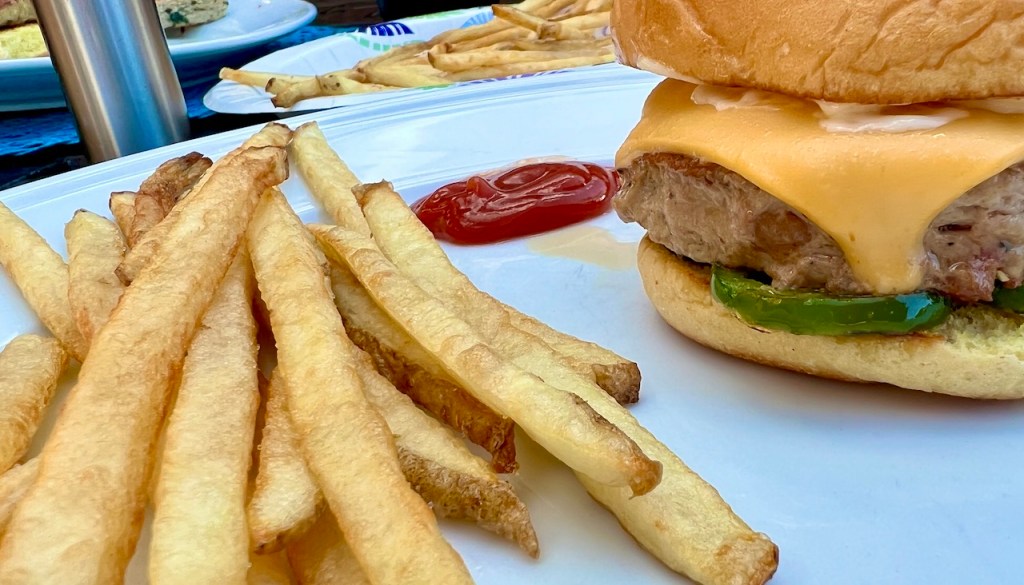
Making these fries are a process, and they’re somewhat of a pain. But, the result is nothing short of spectacular. They’re very crisp, with a golden color, a light fluffy interior, and great flavor.

I start with Russets. I buy the longest potatoes in the bin. Then I cut them into shoestring shape on a mandolin. Next, I brine them in a salt and white vinegar brine for two hours. The salt and vinegar brine help to pull startch and moisture out of the potatoes which helps to create crispness. Next, I fry them at around 275-300 for three to four minutes until they’re just cooked through. It’s important not to get any color on them, we’re essentially blanching them in the oil. Then I lay them out single file on a sheet pan and freeze them. Once they’re fully frozen I put them in a ziploc bag until I’m ready for the final cook. Freezing is important. The ice crystals that form in the interior help to create that light fluffy texture that’s so pleasant to eat. Lastly, I fry the frozen fries at 375 degrees for about 3 minutes until crisp, being careful to not let them get too much color.

These fries are just as good, or better than McDonald’s. And really, all of the work is done ahead of time. I make a big batch and can pull as many fries as needed from the freezer to have amazing fries in just a few minutes.

The Pierogi at Chester’s Smokehouse

When I was little, one of the treats my father would make for us was fried spaghetti. Occasionally we’d have spaghetti and meatballs, and invariably there’d be extra pasta leftover. Instead of saucing it, he’d throw the plain pasta in a frying pan with some butter. He let the pasta sit in the pan until one side browned and crisped up, then flip the whole thing, and repeat. It was one of my favorite things as a kid. Crispy, crunchy, chewy, and full of flavor from the caramelized pasta and butter. It was always a treat for me.

Fast forward to my early twenties when I discovered pierogi. I forget the brand I would buy, but I’d get them in the freezer isle at the grocery store. And I loved them. I’d fry them up in a pan with butter, and the experience reminded me of the fried spaghetti I’d have as a kid, only better, due to the addition of the mashed potato filling. Carbs on carbs. Yum.

A few weeks ago, I had the pleasure of dining at Muza the Eastern European restaurant in Troy. Everything we had was delicious (I especially recommend the potato pancakes), except one item, the pierogi. I didn’t care for them, nor did anyone in our group. The main downfall being the overly thick pasta shell, it was gummy, and there wasn’t enough filling. We tried some fried, and they lacked crispness and that wonderful caramelized pasta flavor I love so much.

About a month before Muza, I went to the Purple Pub in Watervliet. They had pierogis as a special on the menu “made by the church down the street”. They were fantastic, and that the local church made them, only added to their appeal.

Those two experiences reignited my interest in pierogi.

Continue reading “The Pierogi at Chester’s Smokehouse”

Blue Apron – A Pictorial

If you’ve never heard of Blue Apron, they are a fresh, uncooked, meal delivery service. Each week, they send you 3 meals, with all the ingredients you need to cook the meal and recipe cards with instructions. The only items you need to have on hand are olive oil, salt, and pepper.

We’ve fallen in love with it. I’m a decent home cook, and if you’ve visited my blog at all, you’ve probably seen some of the recipes I’ve posted. But I love variety. And as good as I consider my own recipes, I get bored with them sometimes, and crave something different.

Continue reading “Blue Apron – A Pictorial”